What to Know About Homeowners Insurance in the New River Valley: Costs, Coverage, and Local Considerations
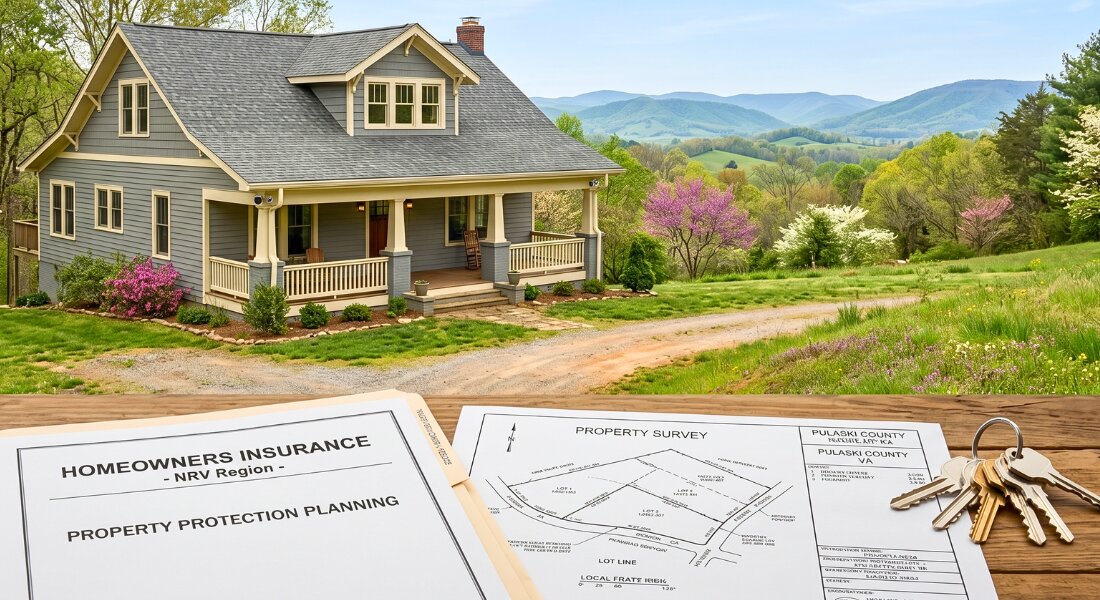
Planning to buy a home in the New River Valley? Spent a lot of time thinking about your mortgage rate, your down payment, and how much house you can afford? But did you consider one line item in your budget that catches many buyers off guard: homeowners insurance?
If not, then you must! Virtually every lender requires it, and the cost can vary significantly depending on various factors. Understanding what drives those differences helps you budget more accurately and avoid surprises at the closing table. Let’s explore the key factors that affect homeowners insurance in the area so you can shop with confidence.
NRV Market Snapshot: Montgomery County at a Glance
As of May 2026, Montgomery County’s median home price is $435,000–$445,000, with homes selling in 50–55 days. Inventory remains tight, especially in Blacksburg, where demand for Virginia Tech exceeds supply. Mortgage rates fell below 7%, boosting spring activity while prices remain strong near campus, and Christiansburg sees even sharper gains.
How Location Within the NRV Affects Your Premium
One of the biggest factors affecting your homeowners insurance rate in the New River Valley is location. The region includes a mix of areas, from the more developed communities around Blacksburg and Christiansburg to the rural parts of Floyd, Giles, and Pulaski counties.
Insurance companies assess several location-based risks, including:
- Distance to the nearest fire station
- Access to fire hydrants
- Emergency response times
Because of these factors, homes in more remote areas often cost more to insure. So, if you’re thinking about buying a place that’s 15 or 20 minutes from the nearest volunteer fire department, don’t be surprised if your insurance premium is higher.
Flood risk is another location-specific factor that many New River Valley buyers underestimate. Properties near the New River, the Little River, and tributaries running through Radford, Pembroke, and other low-lying areas may fall within or near FEMA-designated flood zones.
A few key points to keep in mind:
- Use FEMA flood maps to check the property’s flood zone before purchasing.
- Standard homeowners insurance policies generally do not cover flood damage.
- If the property is in a designated flood zone, your lender will typically require a separate flood insurance policy through the National Flood Insurance Program (NFIP) or a private insurer.
- Even if a home is just outside a designated flood zone, optional flood coverage may still be worth considering due to the region’s history of heavy rainfall and river flooding.
Taking the time to evaluate flood risk before buying can help you avoid unexpected insurance costs and ensure your property is adequately protected.
Older Homes, Rural Properties, and Coverage Considerations
The New River Valley has a wonderful mix of housing stock. You’ll find new developments in Christiansburg to historic homes in Radford, Pearisburg, and the small towns scattered throughout Floyd and Giles counties. That character and charm can come with insurance implications.
Older homes often have outdated electrical systems, aging roofs, or original plumbing that insurers view as higher risk. If your home still has a fuse box, knob-and-tube wiring, or an older furnace, expect your insurer to charge a higher premium or require updates.
Rural properties present their own set of considerations. Homes heated with wood stoves or those with detached structures may need additional coverage riders.
For buyers considering a fixer-upper or a home that needs significant renovation, talk to your insurance agent before closing. Some carriers offer builder’s risk or renovation-specific policies that bridge the gap until your updates are complete and a standard policy makes sense.
What NRV Buyers Can Do to Lower Insurance Costs
While you can’t control every factor that influences your premium, there are practical steps you can take to reduce costs. Bundling your homeowners and auto insurance with the same carrier is one of the most straightforward ways to save. It often reduces premiums by 10 to 20 percent. Many insurers also offer discounts for homes with security systems and modern electrical panels.
Choosing a higher deductible is another option if you have enough financial cushion to cover higher out-of-pocket costs. For example, increasing your deductible from $1,000 to $2,500 can noticeably lower your monthly premium. However, it only makes sense if you can realistically afford the higher amount in a claim situation.
Shopping around is equally important because rates can vary significantly between insurance companies for the same property. Getting at least three quotes helps you compare options more effectively. Working with an independent insurance agent can also be helpful. They can compare multiple carriers and help you find the right balance between coverage and cost for your NRV property.
FAQs About Homeowners Insurance in the New River Valley
How much does homeowners’ insurance typically cost in the New River Valley?
Current annual premiums in the NRV generally range from $1,200 to $2,500 for a standard policy. However, costs vary based on your home’s age, location, size, and coverage level. Properties in rural areas or flood-prone zones may fall on the higher end, while newer townhomes often come in at a lower price.
Do I need flood insurance if I’m buying near the New River?
If your property falls within a FEMA-designated flood zone, your lender will require a separate flood insurance policy. Even if you’re outside a designated zone, optional flood coverage is worth considering given the NRV’s terrain and rainfall patterns. Your agent can check your property’s flood zone status using the FEMA Flood Map Service Center.
Does the age of my home affect my insurance rate in Radford or Floyd?
Yes, older homes in towns like Radford, Floyd, and Pearisburg often carry higher premiums due to aging systems. Upgrading these components can reduce your rate and may even be required by certain insurers before they’ll issue a policy.
When should I start shopping for homeowners insurance during the buying process?
Start getting quotes as soon as you have an accepted offer and know the property details. You’ll need proof of insurance before closing, and shopping early gives you time to compare carriers, ask questions, and avoid last-minute surprises that could delay your closing date.
Let’s Talk About Your Next Steps
The Louise Baker Team works closely with buyers across Blacksburg and the surrounding communities. If you want to talk through your plans or get a clearer sense of where to start, feel free to reach out.